

THE NAMES KIPS BAY HISTORY LEFT BEHIND
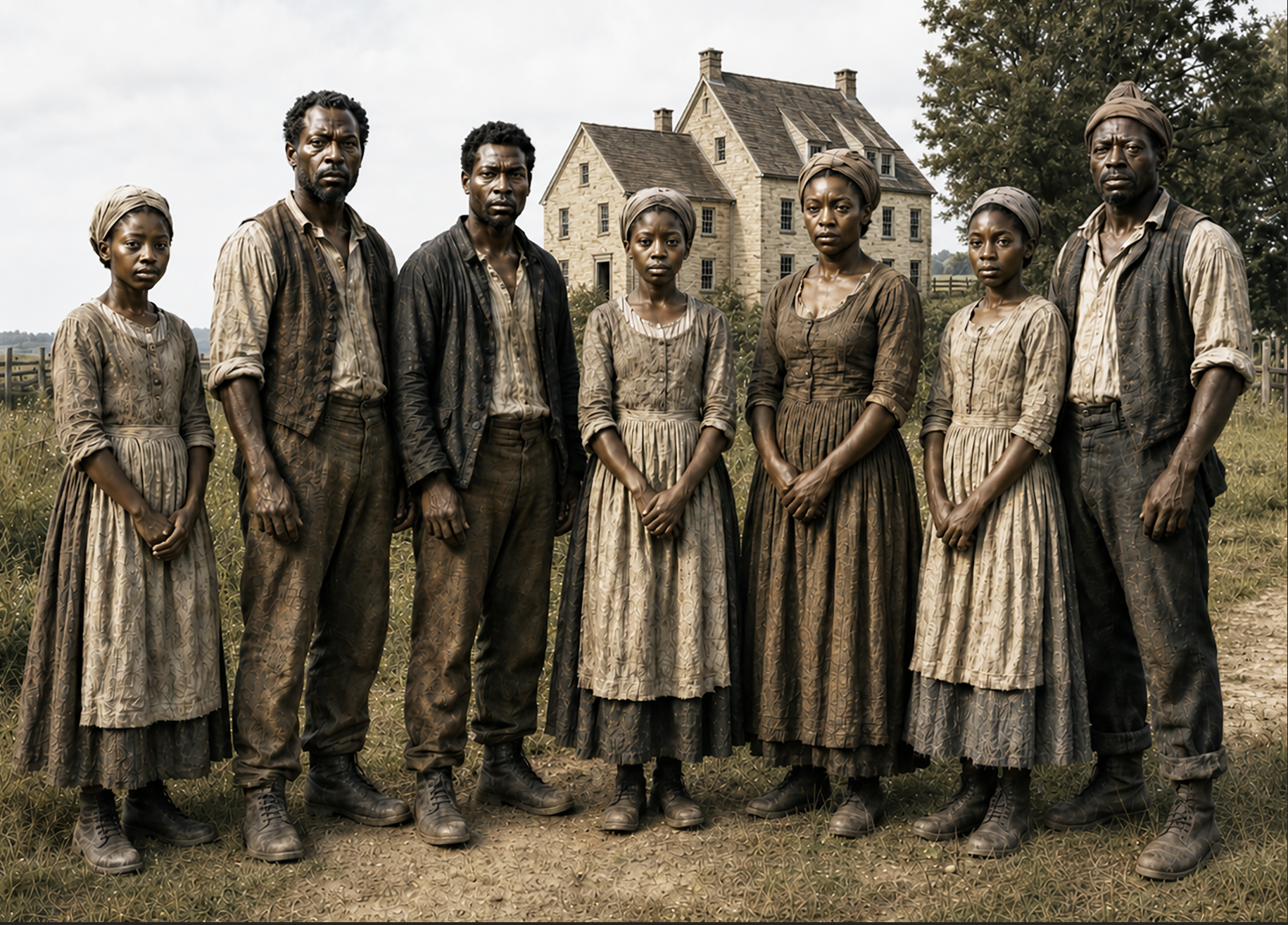
Hannah, Jack, Jacob, Jane, Nancy, Phebe and Tone were enslaved by the owner of the land where St. Vartan Park now stands.
Jack and Jacob escaped.
A 2026 St. Vartan Park Conservancy Exposé
For perhaps the first time, seven people enslaved by the owner of the property that today includes St. Vartan Park are being collectively recognized by name.
Hannah, Jack, Jacob, Jane, Nancy, Phebe, and Tone were enslaved more than 220 years ago by Samuel Kip. From October 1777 to his death in February 1804, Kip was landowner of the estate that gave Kips Bay its name. Jack and Jacob successfully escaped their bondage and were not recaptured during Kip's lifetime.
Hannah, Jack, Jacob, Jane, Nancy, Phebe and Tone (imagined together above, AI-aided, left to right, outside the principal Kip residence) were verified by name through archival records.
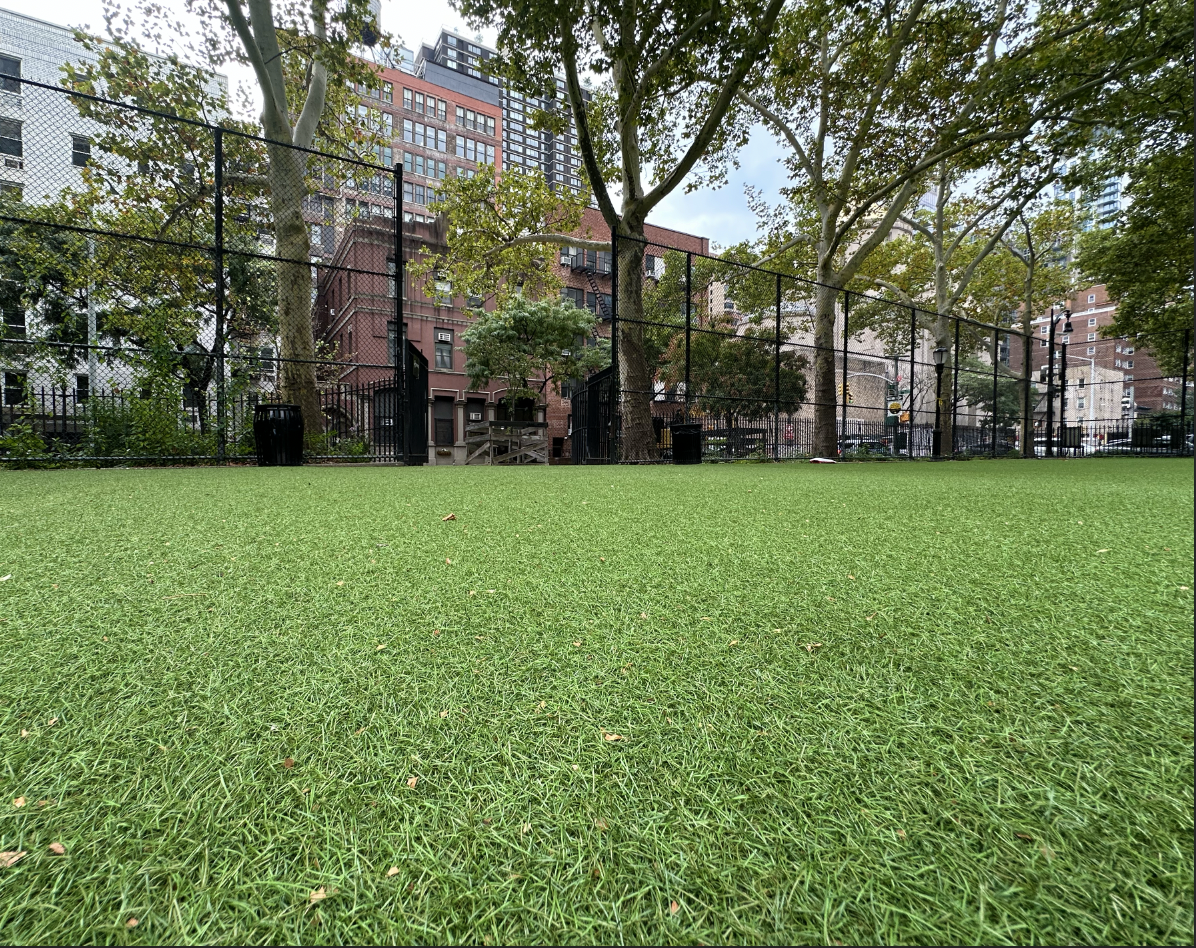
The Kip house stretched roughly from what today is a part of East 35th Street alongside the St. Vartan Park athletic field (above) to where two brick buildings now stand (background center).
The first Kip patriarch in America was the Dutch immigrant tailor Hendrick Hendricksen Kip, who arrived in Manhattan in the 1630s with his wife Tryntje and their five young children. Hendrick was given land in the city then known as New Amsterdam and became a prosperous tailor and public official.
Documented ties between the extended Kip family and slavery reach back more than 350 years. Daughter Baertje married skipper Jan Jansen van St. Obyn and the couple had 12 children. Fifteen years after they married, the husband-father was a paid pilot of the slave ship Gideon.
The Gideon docked in Manhattan in August 1664 with 153 enslaved males and 137 enslaved females aboard after stops in West Central Africa and Curaçao. At least 83 other enslaved passengers died during the voyage.
Around the time of Gideon's arrival, Hendrick’s son Jacob Kip was living on farmland along the East River extending from the bay that would become known as Kips Bay.
The acreage, known as Gregory's Plantation before coming into Jacob's possession, included all the land of today's St. Vartan Park with one exception: Some of the park's east side was then part of the bay (later landfilled). The property, which was later incorporated into a larger estate, was bordered by the bay and what would roughly become East 34th Street, East 37th Street and Lexington Avenue.
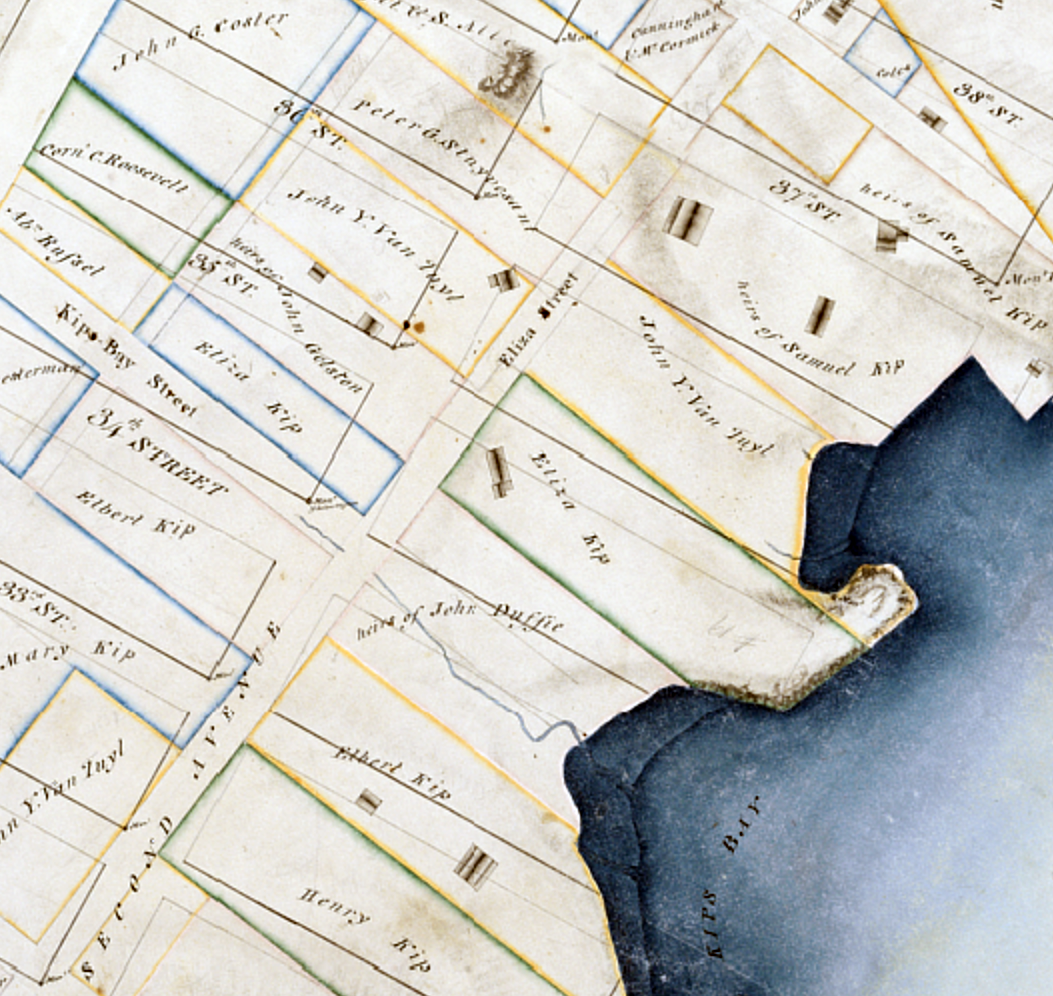
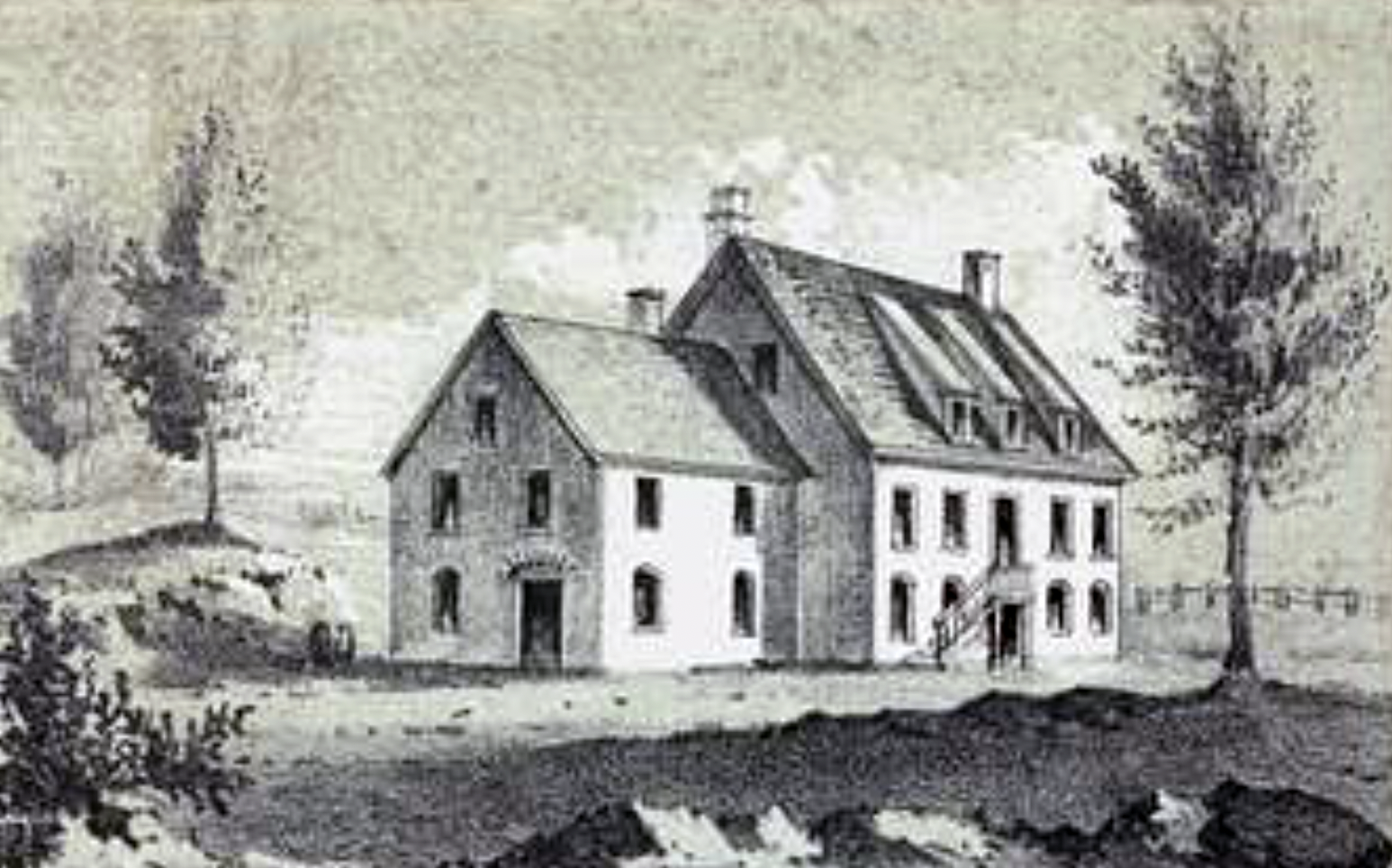
The precise location and outline of the Kip house is preserved on the above map (middle, on the left of the text "Eliza Kip"), drawn in the early 1800s by John Randel, Jr. The Randel map also shows the city's approved but not yet implemented grid of streets and avenues. The residence is pictured below in a lithograph published around the time the house was razed in 1851.
Hendrick Hendricksen Kip came to live with his son at the Kips Bay farm and died there in 1685. Before Samuel Kip became the family's patriarch of the land, the property had expanded north and south to more than 100 acres in total — approximately from today's East 26th Street to East 42nd Street.
Although Samuel Kip became the Kips Bay landowner upon his father's death in 1777, Samuel departed with his family to what's now Rockland County in 1776 when British forces came into the city. He returned around the end of the British occupation in 1783. In 1784, Samuel Kip was elected city alderman of the Out Ward, the then-rural part of the city — including the Kips Bay land — outside the urban core at Manhattan's southern end.
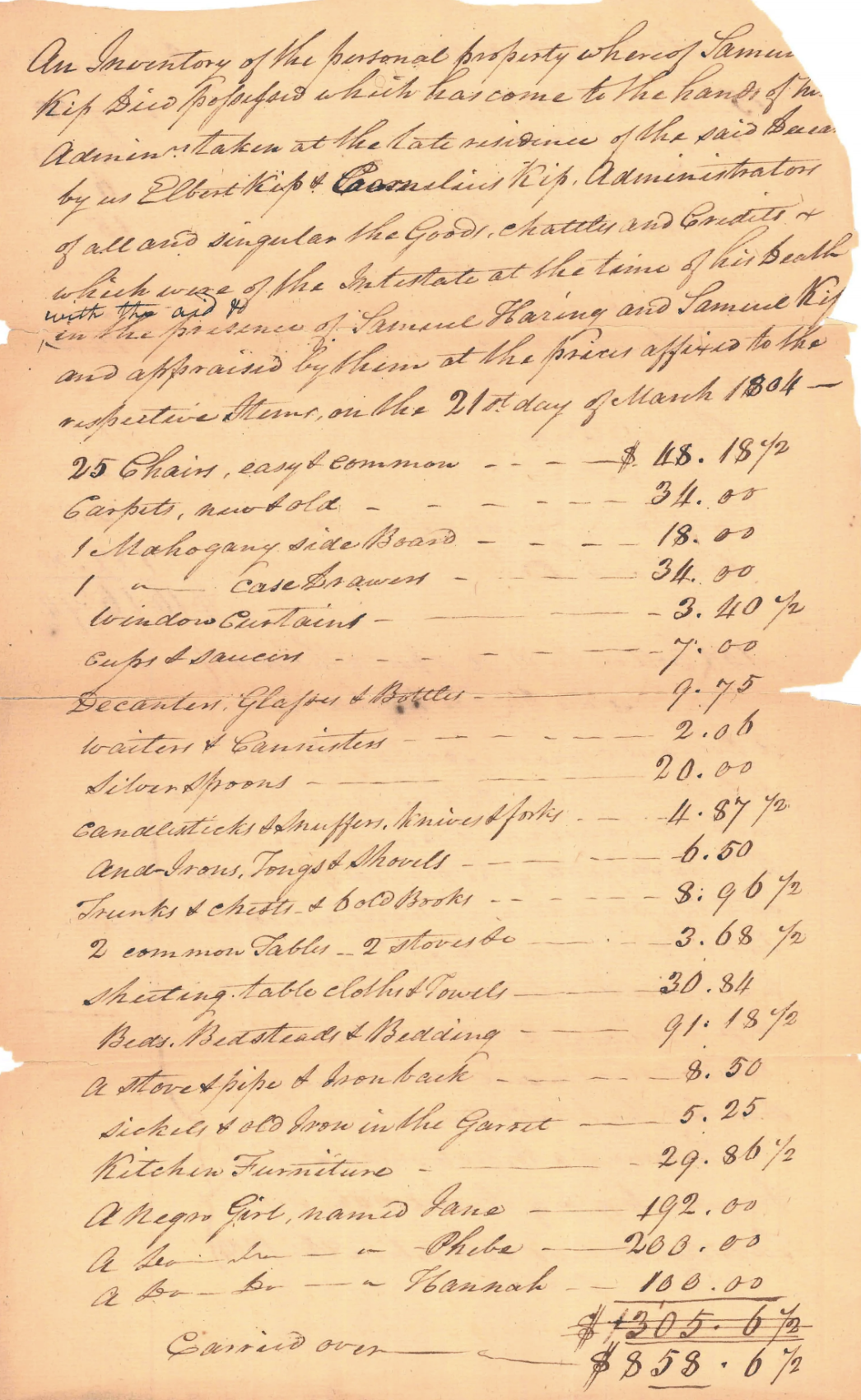
Samuel Kip died without a will on February 14, 1804, but Hannah, Jane and Phebe are each listed by name as itemized property in the enslaver's posthumous estate inventory (above), now preserved in the NYC Municipal Archives’ estate inventory collection. Hannah was appraised at $100, Phebe at $200 and Jane at $192.
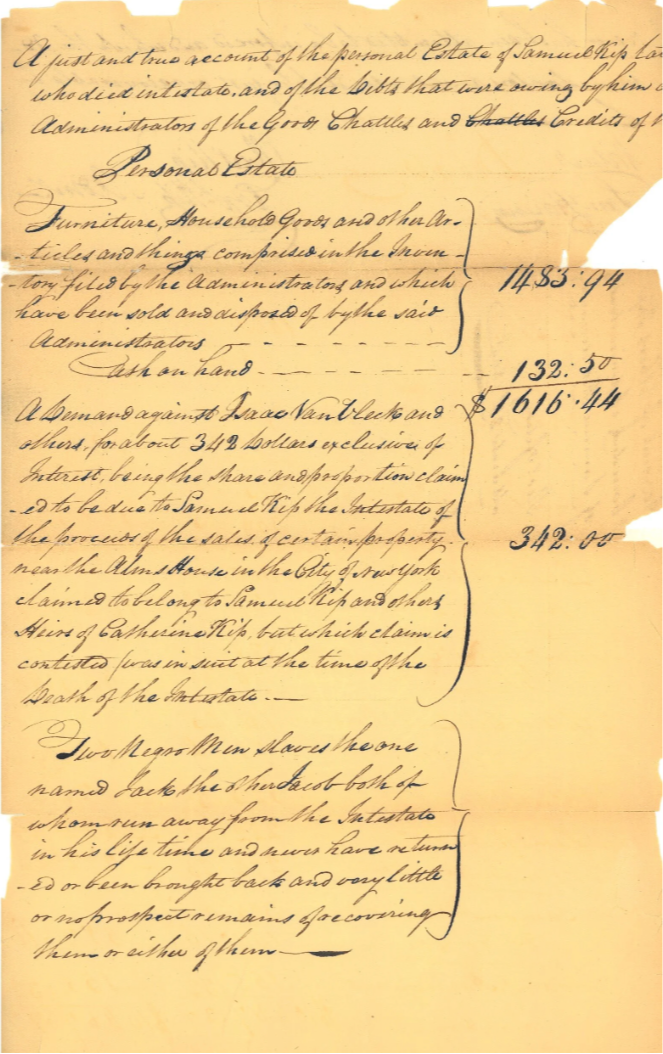
The inventory also references (below) Jack and Jacob, "both of whom run away from the Intestate [Samuel Kip] in his life time and never have returned or been brought back and very little or no prospect remains of recovering them or either of them."
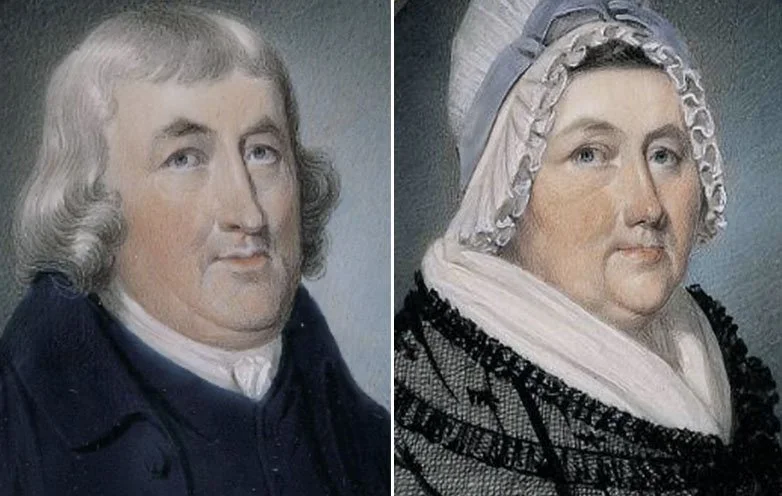
A separate New York County Register manumission record, dated April 5, 1804, reports that Nancy and Tone were enslaved by Samuel Kip. Kip lived at the Kips Bay farm with his wife, Ann Herring (below, from left, in circa-1795 paintings by Archibald Robertson). The manumission record indicates Nancy was 34 years old and Tone 46.
Jacobus Kip, the son of the Jacob Kip who was the first Kip patriarch at Kips Bay, was among many Hendrick Hendricksen Kip descendants who held enslaved laborers, although they may or may not have been at the Kips Bay farm.
As one example, in his 1928 book 'History of the Kip Family in America,' descendant Frederic Ellsworth Kip shares this 1697 record: "Jacobus Kip and Honorica, his wife, gave their daughter, Golyna Verplanck, a negro wench called Duffra." The household location is not mentioned and the couple may have been living in Queens at the time.
In his book, Frederic Ellsworth Kip minimizes Dutch slavery. He writes of Jan Jansen van St. Obyn, "He was best known as pilot of the slave ship Gideon ... However, in spite of his occupation, he appears to have been one of the respected men of the community. His gains were large and the Dutch of New Netherland were very kind to their slaves and the slave trade there was without its usual cruelties."
New York's gradual-emancipation laws culminated in 1827. Slavery was abolished nationally with the 13th Amendment in 1865. Between those two milestones in 1851, the Kip house was torn down so that East 35th Street could be built unobstructed. The vast property had already been subdivided. The house was considered the oldest in Manhattan at the time.
Separately, the same year, Horace Greeley's New-York Tribune blasted slavery. An editorial that November declared, "From the depths of our soul we hate and abhor human slavery and every institution, law, or usage whereby the poor and feeble are racked and lashed to make them minister to the pomp and luxury of the wealthy and powerful."