

TAILWINDS: PARK STREETS — FROM SITE OF CITY'S MASS DOG KILLINGS TO HOME OF HORSE WATER STOP — PART OF AREA'S RISE TO NATIONAL ANIMAL-WELFARE LEADER
Originally published in issue 118 of St. Vartan Park Conservancy newsletter, June 1, 2026
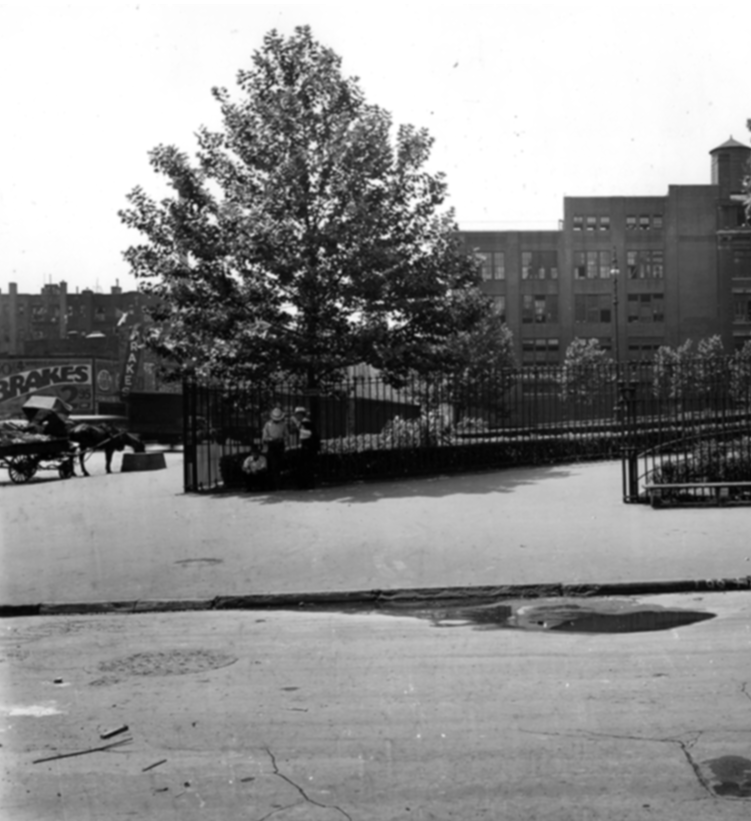
Image: Metropolitan Transit Authority
When a watering trough for workhorses was installed at the garden at St. Vartan (then St. Gabriel's) Park in the early 20th century, the addition (pictured in 1939) symbolized a significant transformation for the neighborhood. Over the course of several decades, the area had risen from where thousands of city-sanctioned mass dog killings took place to its status as a national leader on animal-welfare reform.
In the summer of 1851, the city's first municipal dog pound was opened on the Lower East Side, then closed soon after on account of local residents' complaints. The city's first enduring pound came that same summer at what's now the southwest intersection of St. Vartan Park — Second Avenue and East 35th Street.
The police department-run pound would become the site of lethal clubbing and drowning of dogs. The city's dog law that had been passed in 1811 determined that stray dogs could be killed and their carcasses purchased by the city. When the formal pounds started, claims of high-risk summer dog rabies then commonly called hydrophobia was routinely cited as justifiable grounds for the slaughter.
The killings continued for years in the Murray Hill-Kips Bay community, with the city's pound at four locations in the community for all but one of the next 22 years. The facility was only open in the summer months, following a claim that dogs became hydrophobia-driven "mad dogs" in summertime.
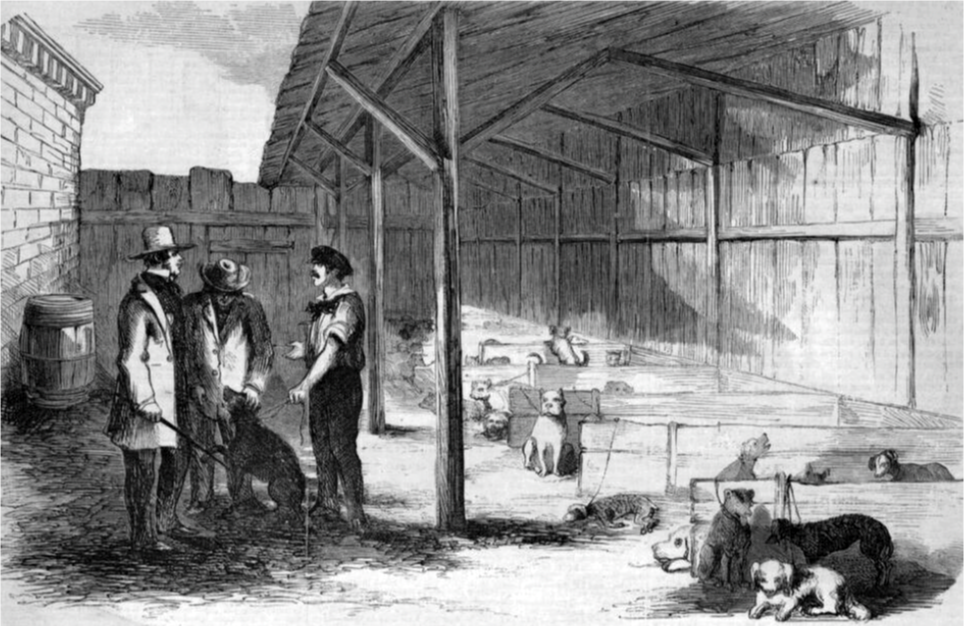
Image: Frank Leslie's Illustrated Newspaper
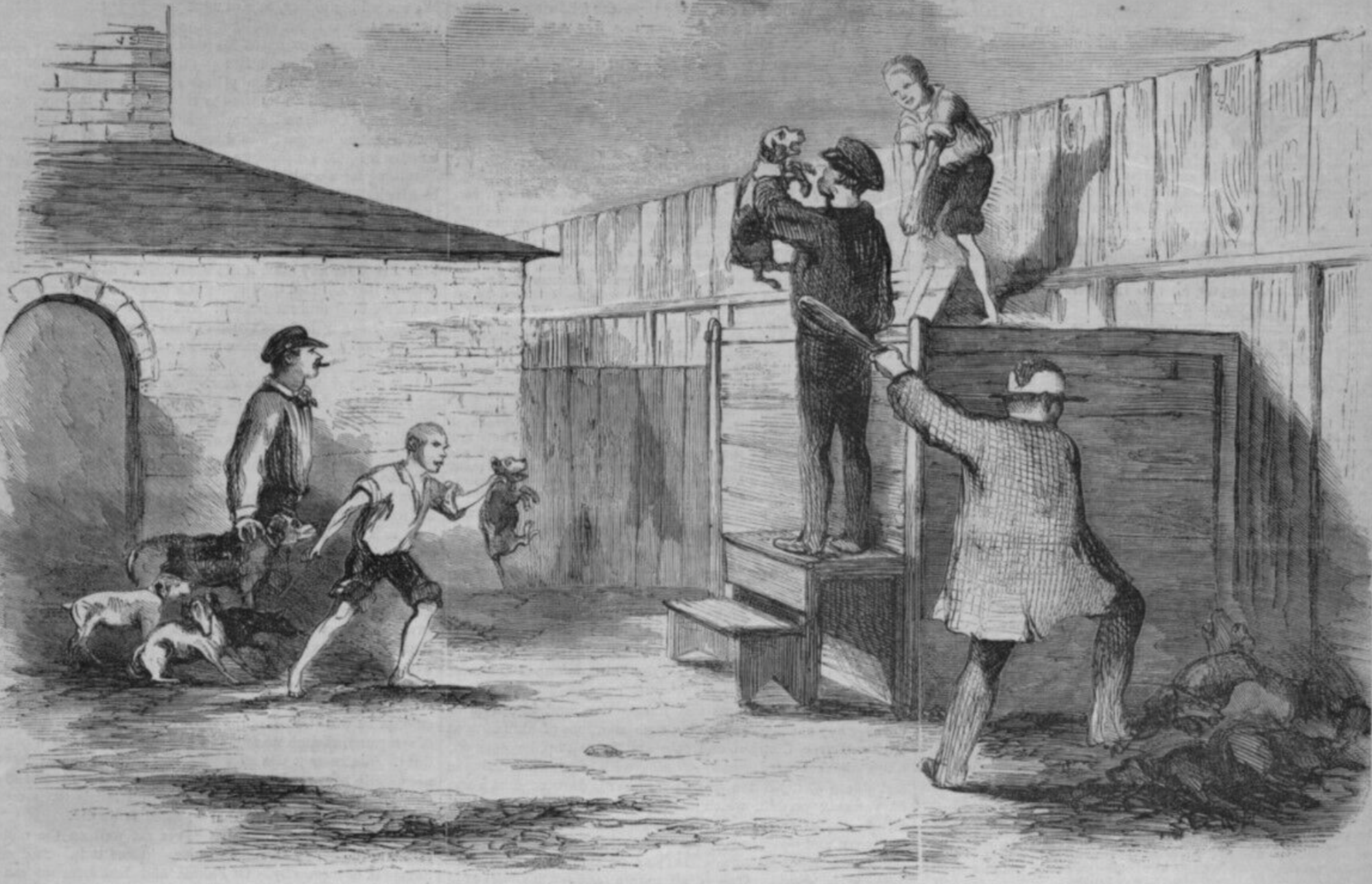
Image: Frank Leslie's Illustrated Newspaper
Because the city gave money to the public for bringing stray dogs to the pound, sometimes hundreds of dogs a day were brought in for almost sure death. Dog owners at times were given up to 24 hours to find and claim their missing dogs. Dogs in the city were supposed to be muzzled in the summer, but the bounty hunters were known to remove muzzles and to steal pets from homes to collect the cash.
As a reporter for Frank Leslie's Illustrated Newspaper wrote in the summer of 1858, a piece accompanied by the two engravings above, "For the inexorable Mayor has promoted the fatal 'dog law;' has offered a premium of fifty cents per canine head for the dog population of the city, and daily some hundreds of these respectable animals fall wet martyrs to the popular prejudice against hydrophobia.
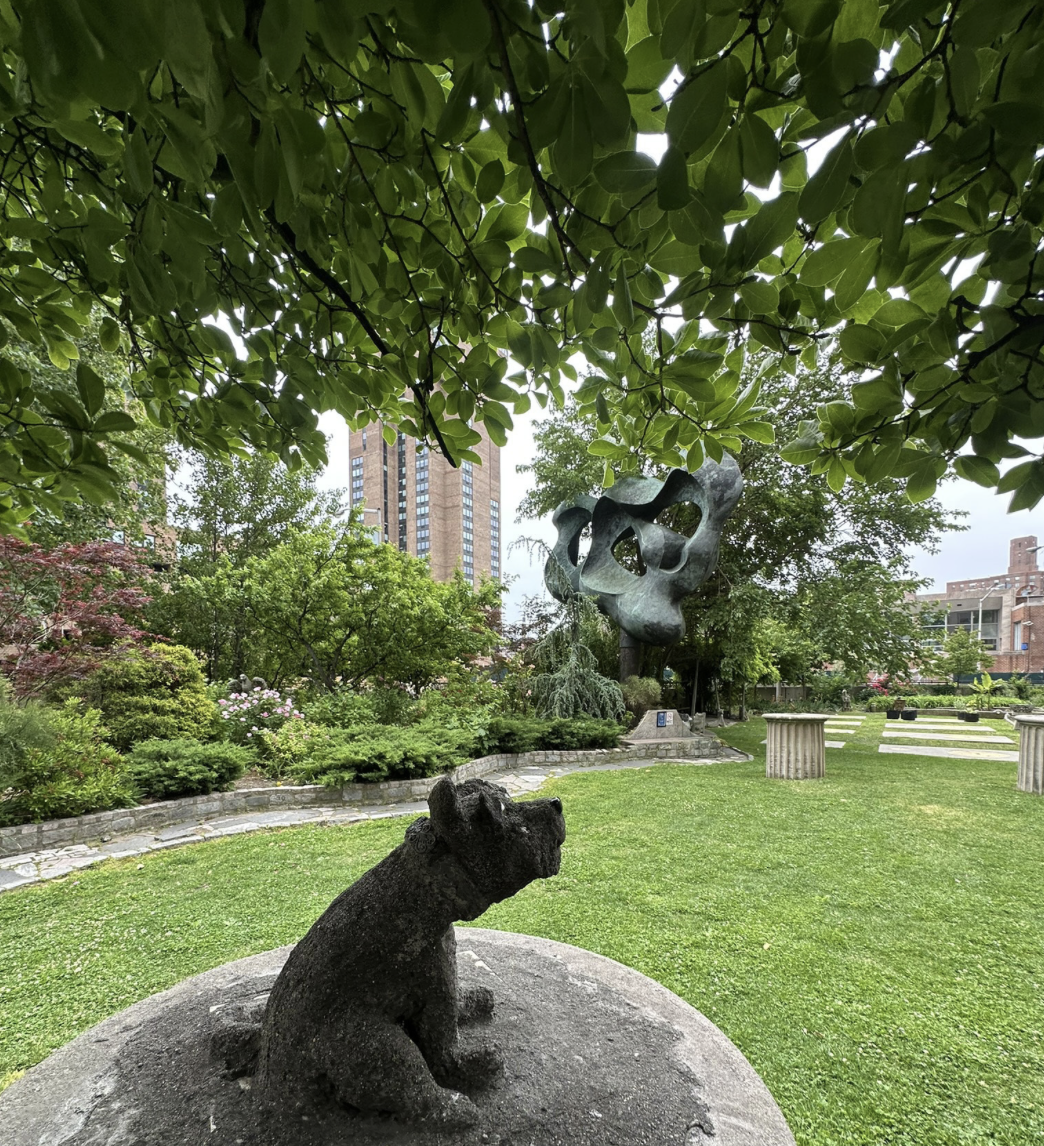
Image: Manhattan East Community Association
"Numbers of the most distinguished dogs of Gotham are extinguished every night just before sundown ... The would-not-be-bitees being in the majority, the would-be-biters have to suffer, and a damp death is daily administered to a large and varied assortment of curs of all degree, the immediate instruments being a hydrant, a hundred and twenty feet of leather fire hose and an unlimited supply of Croton [water]."
From 1860 to 1873, the city dog pound was a barge at the foot of East 26th Street on the East River alongside Bellevue hospital — before landfill occupied the space that now houses FDR Drive and the Waterside apartment community. The location was between today's Bellevue Sobriety Garden alongside 26th Street and Waterside (above foreground and background, respectively).
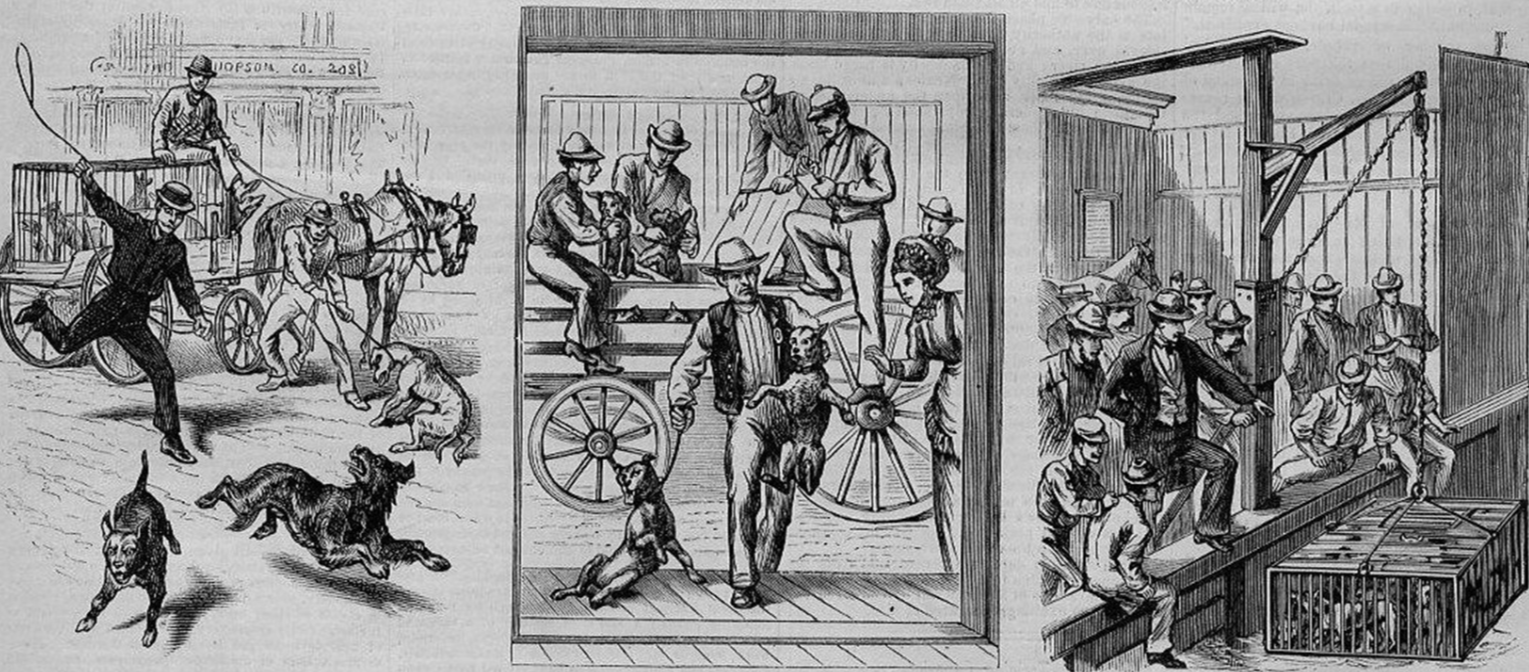
Image: Frank Leslie's Illustrated Newspaper
The 26th Street pound would help shine more light on the dogs' treatment at the pound. In June 1867, soon before the dog-bounty season was opened at the 26th Street pound, the New York Times described the killings as "drowning in the canine bath tub." The story reports 4,819 dogs were taken there the previous season with only 278 claimed by their owners before the expiration of a one-day grace period. The practice continued when the pound moved down river to East 16th Street — a setup illustrated in the right frame above from an 1877 overview of the city's roundup and drowning of dogs.
The Times story offers that this treatment of dogs, "is one of the most ridiculous and absurd laws on the statute book ... The present dog law, or any other dog law that legislative wisdom has yet enacted, is utterly useless and productive of more harm than good. Medical science — to its disgrace — has not been able to comprehend anything whatever of the nature, origin or proper treatment of hydrophobia, whether it has any connection to the bite of a rabid dog or not."
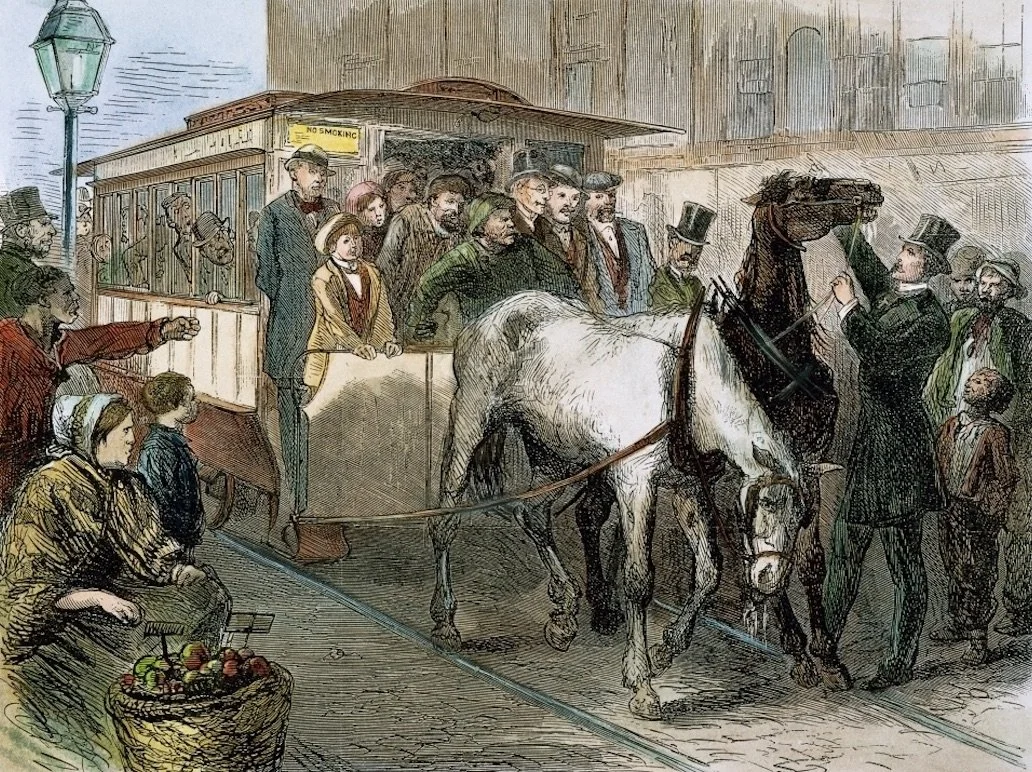
Image: Sol Eytinge
The previous year, Henry Bergh, an East Manhattan diplomat in President Lincoln's administration (depicted above in 1872 checking on a transit horse) founded the American Society for the Prevention of Cruelty to Animals (ASPCA) as the nation's first organization dedicated to animal rights and welfare.
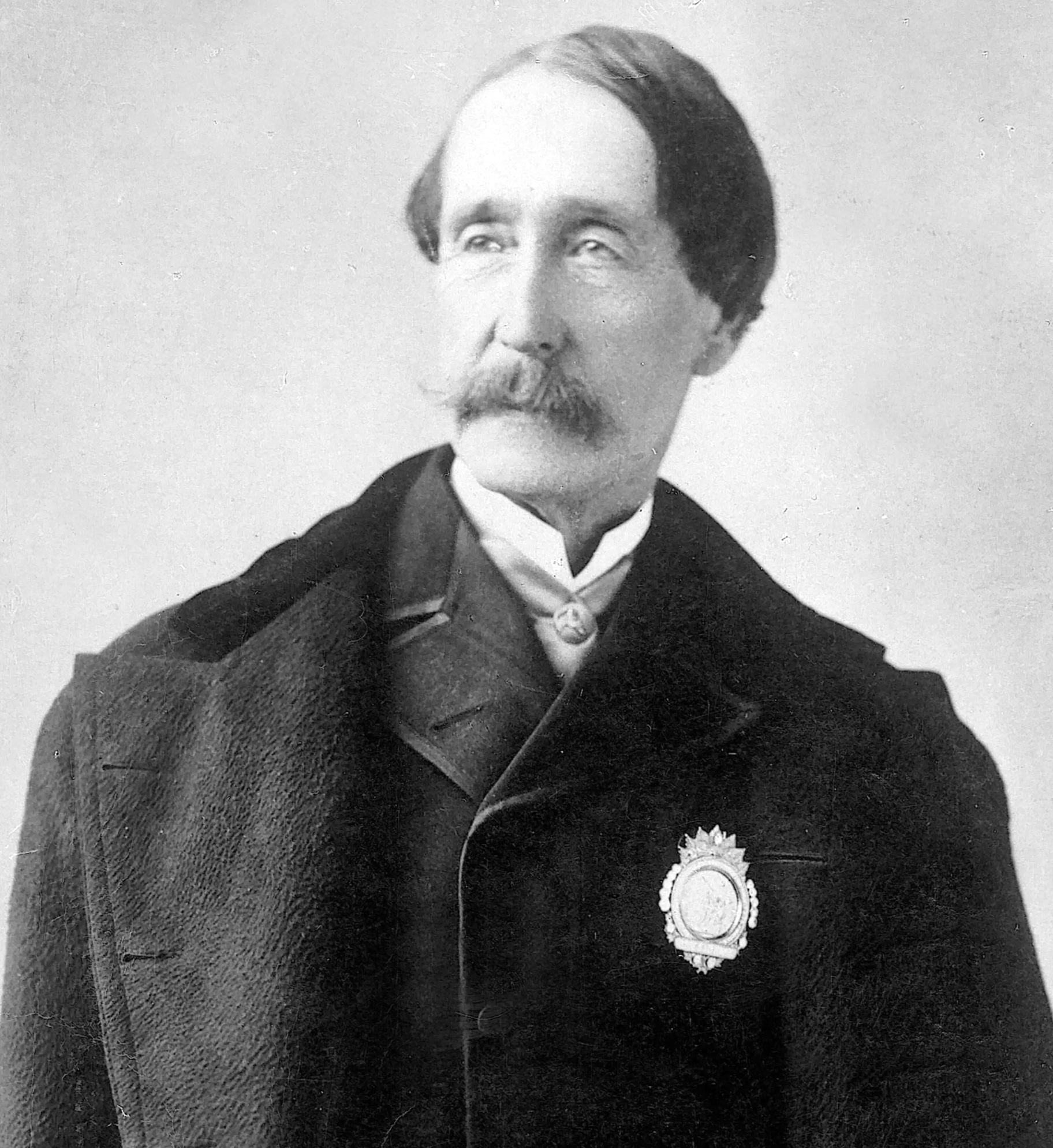
Within two years, a New York State law Bergh (below left) drafted "for the more effectual prevention of cruelty to animals," passed and the ASPCA was given the power in the city and other cooperating municipalities in the state to make arrests for animal cruelty. In its first year, the organization won most of the prosecutions it initiated.
In 1894, the city ceased paying dog bounties. The ASPCA was given jurisdiction of the city's stray dog care. Dog pounds became known as dog shelters. The ASPCA held its city dog shelter oversight role along with city work on animal cruelty investigations until the NYPD took over in 1994.
In 2020, more than 130 years after Bergh died in his Murray Hill home on East 38th Street, a New York Times piece concluded of the ASPCA founder, "One man did more than any other to change the way New Yorkers — and Americans overall — treated their animals."
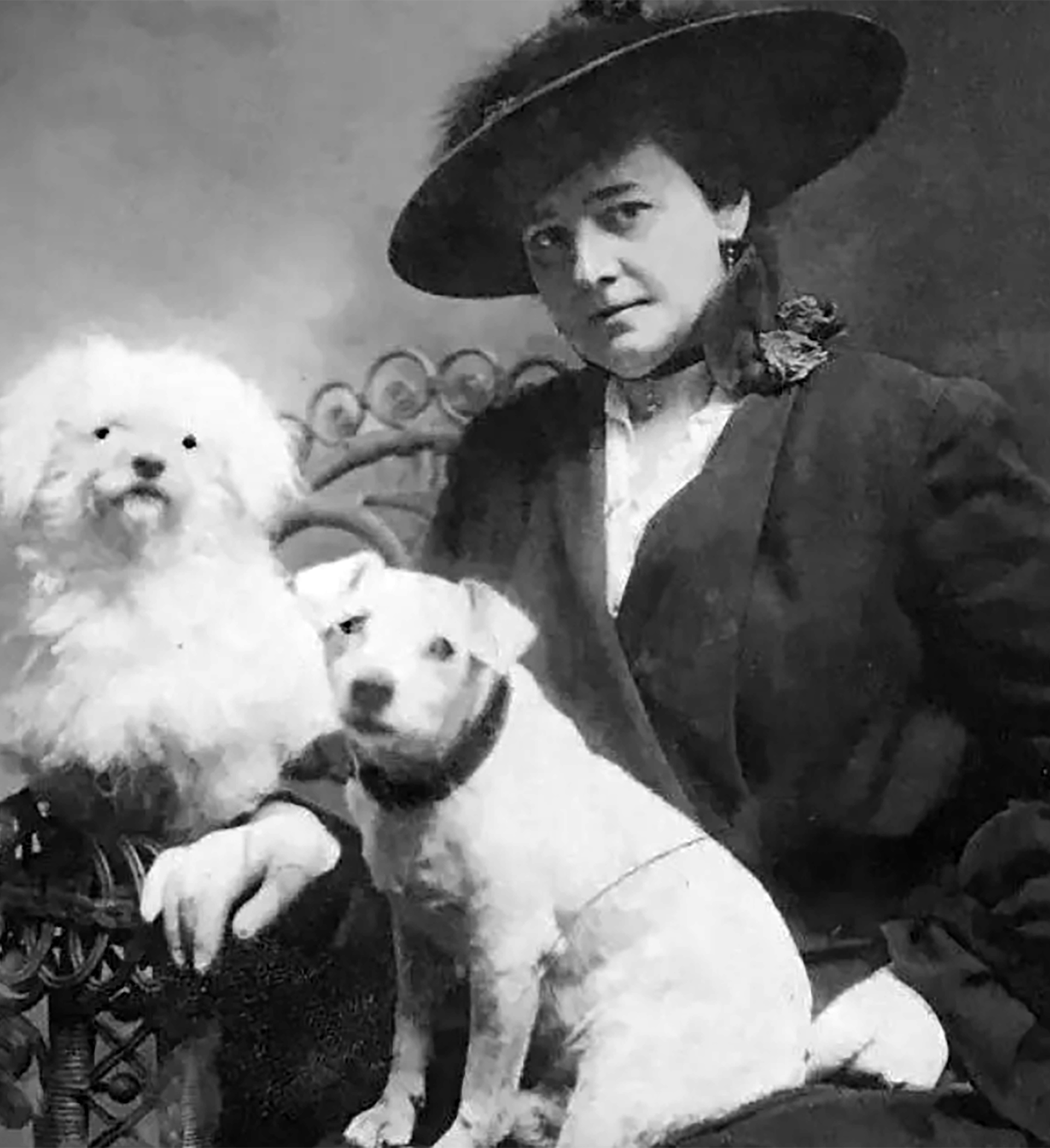
The woman with the biggest impact may be Manhattanite Flora Kibbe (above right in 1943). In 1903, in her 20s, Kibbe founded, funded and administered Bide-A-Wee Home for Friendless Animals, the nation's first permanent "no kill" animal shelter. No animal at what would be shortened to Bideawee was allowed to be euthanized. The facility would also adopt a policy to spay or neuter animals before adoption without cost to the owner.
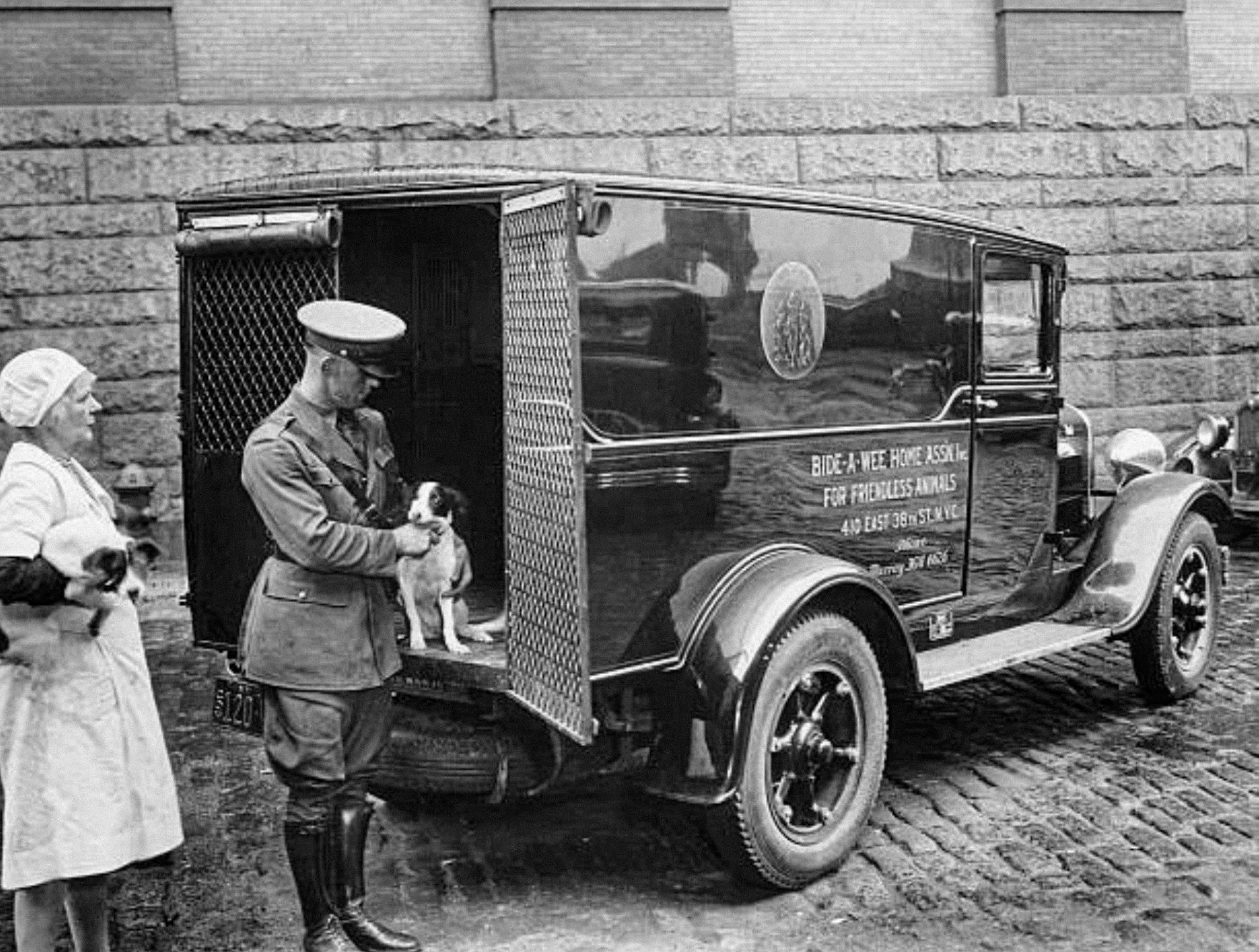
Image: George Rinhart
Bideawee moved its shelter in 1912 to 410 East 38th Street, once the site of horse stables and within 700 feet of St. Vartan Park. Kibbe picked the location because of its proximity to the where some dogs were still being illegally drowned. Bideawee ambulances (one above) from East 38th Street would answer calls about animals either injured or in need of a home. The shelter expanded to include medical services for animals.
Writes Diane Beers in her 2006 book For the Prevention of Cruelty, "Kibbe was far ahead of her time, and most shelters persisted in their singular humane killing approach. Still, Bide-a-Wee harkened a change ... eventually, shelters increasingly boasted of the number of animals saved, not humanely destoyed."
In the early 1990s, Bideawee says the organization's shelters had found homes for more than a million animals.
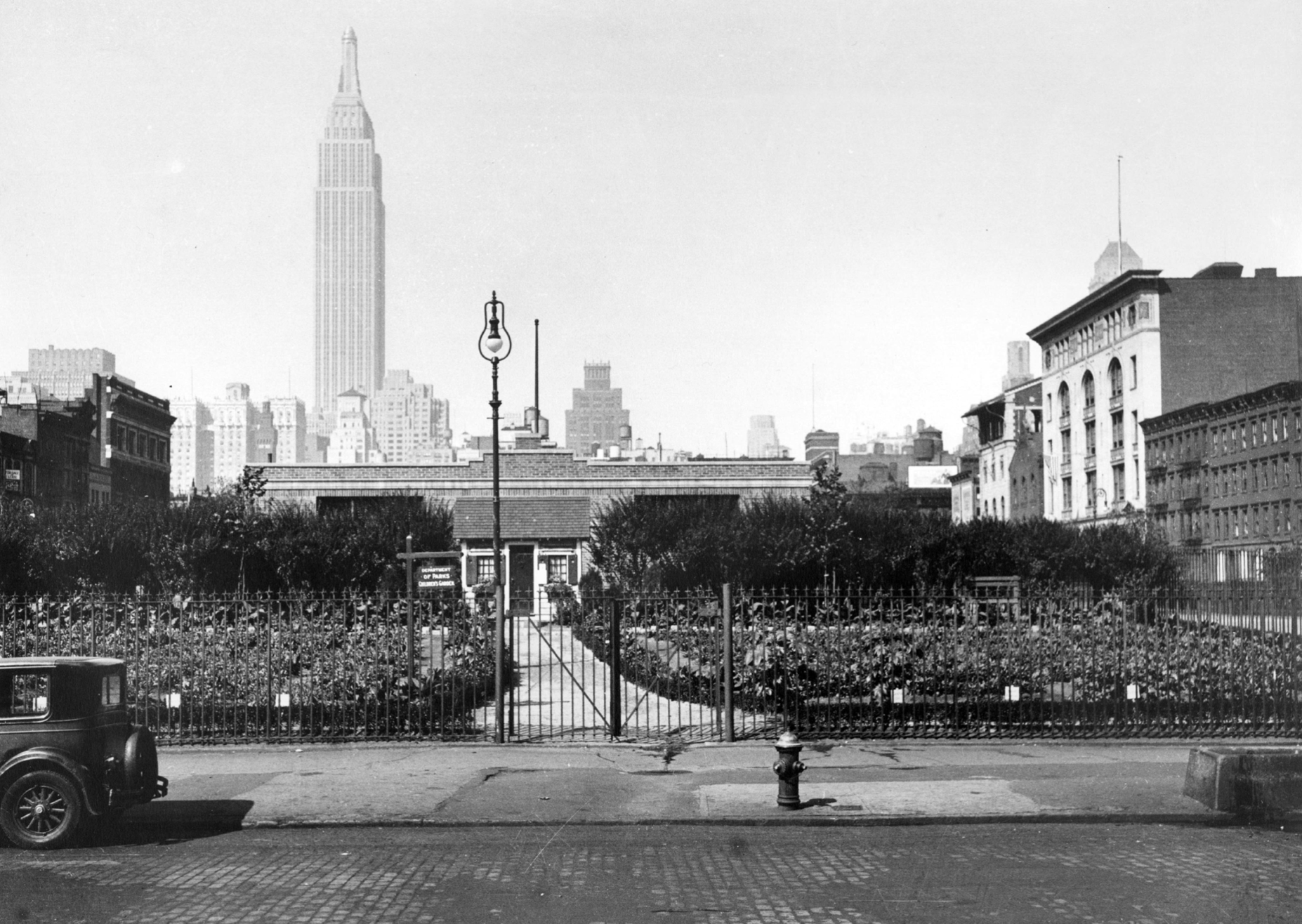
Image:: City of New York
In 1906, before Bideawee's move to East 28th Street, the New York Tribune reported that the organization "has placed a water trough in front of its headquarters, which is greatly appreciated by thirsty horses. About 50 others are to be placed in different parts of the city, probably before fire stations," due to water accessibility there.
After its move to near the park, Bideawee was happy to learn a fire hydrant would also be made accessible outside the park garden (above in 1939 with fire hydrant and trough to the right of the entrance). Decades after a hydrant had been used as part of the city’s method to exterminate stray dogs in the neighborhood, the device was used for the enrichment of animal welfare.
— Kevin O’Keefe
